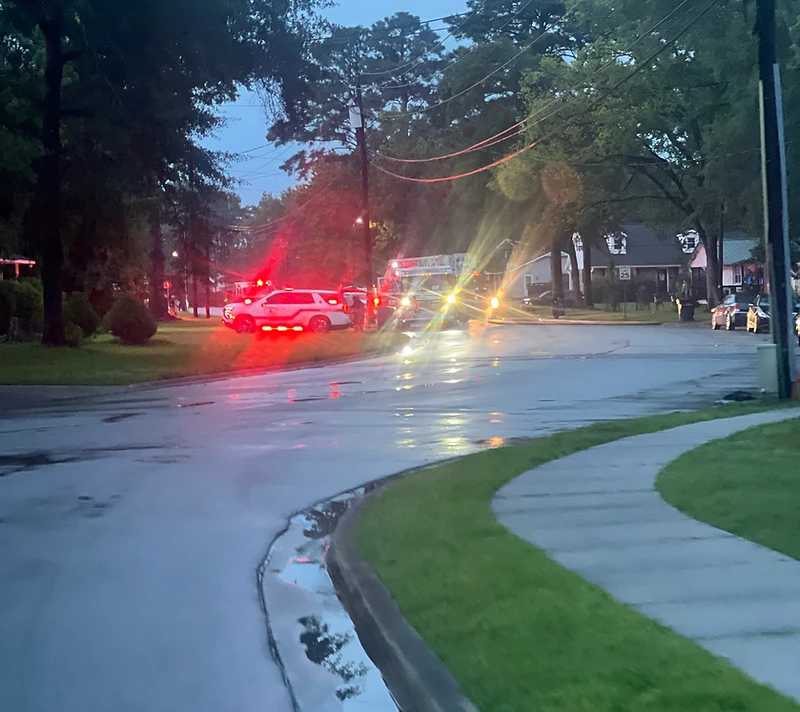
A dusk response on a wet suburban street.
Onslow Priority — Rapid Aid crest
Onslow Priority — Rapid Aid
Emergency Response Reimagined

Rapid aid when it matters most.

Built For When Seconds Count

Real responses, rapid aid, informed responders. Onslow Priority connects the people, the equipment and the responders who are already closest, so help starts while the crew is still on the way — and nobody faces an emergency alone.

Community respondersEmergency resource mappingGuided help, step by stepReal-time safety notices
Every figure published and sourced Rapidly available aid Help closer to home when time counts
Open app
Emergency guides
Onslow Priority — Rapid Aid
Onslow Priority — Rapid Aid crest
Onslow Priority — Rapid Aid
Emergency Response Reimagined

Three things decide the first minutes of an emergency: who is already nearby, what is near them, and how much the responding crew knows before it arrives. Everything the platform does serves one of those three.

First response

Trained bystanders nearby, alerted for rapid lifesaving medical and rescue emergencies to prevent loss of life.

Emergency resources

The incident, the resources and the route, on one map.

Live collaboration

One shared record that callers, bystanders, dispatchers and responders all read and add to at the same moment — text, photo, video and voice — so what any one of them knows reaches everyone working that call.

Platform fact sheet · Supports 911 and never replaces it · Built to be adopted by any community, city or agency
Live collaboration
One shared record that callers, bystanders, dispatchers and responders all add to at once, for optimized informed responses
0.65 mile
Alert radius for verified nearby trained bystanders
55 types
Emergency resource types mapped, each with its own icon
296 guides
Across 11 categories, with voice and a CPR metronome
Modeling
Disaster alerts and modeling, alongside role-based access with 2FA/3FA
Configurable
Features, roles, workflows and security settings set by each community

Pioneered by Cameron Anderson, Nathan Davis, Kaleb Wiseman and Court Yarnoz.

Why it matters

Why it matters

An emergency is decided in the minutes before a professional crew arrives. Somebody is already standing there. Somebody close by is trained. The defibrillator, the naloxone and the bleeding-control kit are often a few hundred feet away — behind a counter, in a truck, on a wall in the next room. What is missing is not equipment, training or willingness. It is connection: nobody knows a call has gone out, nobody knows who is close enough to help, and nobody can find the equipment that would change the outcome.

The first minutes decide the outcome The people who can save a life are already there The equipment exists — it just cannot be seen
Read the full
One coordinated system

Community organizations and emergency services, centralized together

Most places do not fail for a lack of help. They fail because the help is scattered — a pantry here, a shelter there, a responder who cannot see either. This platform carries them in one place, hosts their pages, and connects the systems they already use, without taking those systems away from them.

Community organizations, in one place

Nonprofits, faith and volunteer groups, food programs and outreach services each get a page that says what they do, who is eligible, where they are and how to reach them — rather than being rediscovered during every emergency.

Emergency services alongside them

Agencies, fire and EMS, law enforcement, emergency management, hospitals and county departments are carried on the same platform and in the same directory, so a responder and a neighbor are looking at the same list.

Hosted, not handed over

An organization's public page, its resources and its aid board are hosted here. Nobody has to run a server, buy a certificate or maintain a website to be reachable when it matters.

Linked to the systems agencies already run

Where an agency already has a CAD, radio, paging or records system, that system is joined to the platform on the agency's own terms — switch by switch, with everything off until they turn it on.

Nothing on an organization's page is published until it has been reviewed and confirmed, and an organization can always take its own page down. Joining an agency's system is a decision the agency makes in its own portal — this platform never reaches into a system nobody has authorized.

Always answered

When the line cannot be picked up, the caller is still answered

Call volume spikes, and a low-priority call can sit while every dispatcher is on a line. Instead of a ringing phone, the caller can be sent an adaptive triage link: it asks whether they need Police, Fire or Ambulance, then walks them through the questions that belong to that need and files the result as a structured call. A dispatcher sends it by hand, or the board hands it over automatically for calls that are still unassigned.

It is free to send and free to use — a link, the device's own speech, and the app's own intake. Nothing about it replaces 911, and the page says so on every screen: a life-threatening emergency is still a 911 call, made while the form is filled in rather than instead of it.

It asks the right questionsPolice, Fire or Ambulance first, then the adaptive questions for that need — the same ones the app's own call flow asks a caller.
It can be answered out loudThe page reads each question and listens for the answer, using the device's own speech. Nothing is transcribed by a service and nothing is spent.
It lands as a call, not a messageCategory, priority, answers, position and a callback number go straight onto the board with a reference code the caller keeps.
Our mission

Aid that starts before the crew arrives.

Our mission is to provide readily available rapid aid, mapped emergency resources and live information in an emergency: alerting trained bystanders, guiding them to the equipment a community already owns, and giving responders live prehistory, context and updates through video, audio, photo and text — so a response begins with what is already known instead of what has to be asked again.

  • < 2 minThe window aid is designed to reach inside
  • 0.65 miResponder alert radius in this deployment
  • 55Kinds of emergency resource a community can map
  • 296Step-by-step guides in the library
Explore

Every part of the platform, in one place

Open any section to read it in full — the details, the screens and the guides that go with it.

How it works

The call itself — how it is taken, worked, shown and shared.

In the field

Resources, responders and the guidance that runs beside them.

Tools & planning

Modelling, dispatch support and what a deployment asks of an agency.

Agencies & community

For the organizations that run, fund and staff a response.

Trust, scope & evidence

What is protected, what is claimed, and where the edges are drawn.

Next steps

Take part, ask a question, or ask for a demonstration.

More sections

The rest of what this page covers.

In depth

What it is, and what the evidence says

01 · What it is

What Onslow Priority is

A community's missing link between the first minute of an emergency and the arrival of a professional crew.

  • One coordination system for residents, responders and agencies alike
  • Live collaboration with callers and bystanders on the incident as it happens
  • Aid beginning inside 2 minutes by alerting trained bystanders nearby
  • Shared incident information, timelines and structured handoffs
Read the full section
02 · Why it matters

Why it matters

The published figures behind the mission.

An emergency is decided in the minutes before a professional crew arrives. Somebody is already standing there. Somebody close by is trained. The defibrillator, the naloxone and the bleeding-control kit are often a few hundred feet away — behind a counter, in a truck, on a wall in the next room. What is missing is not equipment, training or willingness. It is connection: nobody knows a call has gone out, nobody knows who is close enough to help, and nobody can find the equipment that would change the outcome.

  • The first minutes decide the outcome
  • The people who can save a life are already there
  • The equipment exists — it just cannot be seen
Read the full section
Support this work

Free for the people who need it, anywhere it runs.

It is not tied to one town or one county: a department, agency or community anywhere in the country or the world can run it. Residents are never charged. Departments pay for the parts they use, and donations let us put more resources into a community that could not otherwise afford them.

  • · Defibrillators, naloxone and bleeding-control kits
  • · Guides, voice instructions and training material
  • · Mapping the equipment a community already has
Credits

The people who built it

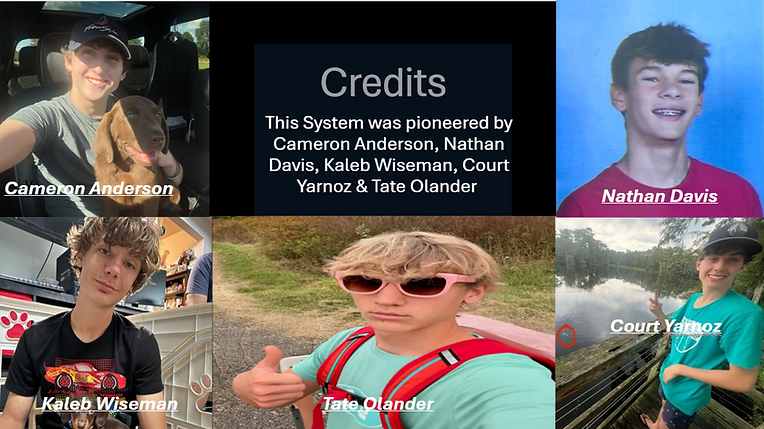
Credits — Cameron Anderson, Nathan Davis, Kaleb Wiseman, Tate Olander and Court Yarnoz

Press a face for that person's biography and contact details.

Get in touch

Questions, corrections, or a resource we have missed

Reach the team directly — a resident, an agency and an organization all come through the same address.

Read the questions first
For agencies & community groups

Run a community, department or nonprofit?

Put your community on the map: a public page with your services, stations, notices and contacts, plus the form your people use to add the emergency resources you hold. Sign in if you already have an account — you will land straight on the form.

Add your communityFree. Reviewed before anything is published.
  1. [1]
    Addison Fire Department. “Addison Fire Department Shares 2025 Annual Report.” Town of Addison, 2026.

    Supports: Fire-rescue response-time table.

  2. [2]
    American Heart Association. “2026 Heart and Stroke Statistics Update.” 2026.

    Supports: Cardiac-arrest and stroke figures.

  3. [3]
    Blewer, A. L., et al. “Sex Disparities in Receipt of Bystander-Initiated CPR and Associations with Telecommunicator-Assisted CPR.” Circulation 150 (suppl. 1), 2024.

    Supports: Dispatcher-guided versus unguided bystander CPR (RACE-CARS).

  4. [4]
    Bureau of Labor Statistics. “Fatal Occupational Injuries by Event or Exposure, 2024.”

    Supports: Work-related electrical, explosion, homicide and stabbing deaths.

  5. [5]
    Cardiac Arrest Registry to Enhance Survival (CARES). 2023 National Cardiac Arrest Report; 2024 Non-Traumatic National Survival and Utstein Reports.

    Supports: OHCA survival, bystander CPR and AED use, and first-shock survival.

  6. [6]
    Centers for Disease Control and Prevention. FastStats (Unintentional Injuries; Deaths and Mortality; Drug Overdose; Stroke) and WISQARS.

    Supports: National injury and death tables.

  7. [7]
    Derkenne, C., et al. Academic Emergency Medicine 27(10), 2020, 951–962.

    Supports: Paris Staying Alive ROSC and survival results.

  8. [8]
    Filep, E. M., et al. “Exertional Heat Stroke, Modality Cooling Rate, and Survival Outcomes.” Medicina 56(11), 2020.

    Supports: Heat-stroke cooling and mortality.

  9. [9]
    Fischer, L. S., et al. “Effectiveness of Naloxone Distribution in Community Settings.” BMC Public Health 25, 2025.

    Supports: Survival after community naloxone.

  10. [10]
    Gude, M. F., et al. “Video Streaming or Telephone Communication During EMS Dispatch Calls.” JAMA Network Open 8(7), 2025.

    Supports: Video effect on dispatcher triage accuracy.

  11. [11]
    Hashmi, Z. G., et al. “Prehospital Tourniquet Use for Trauma in the United States.” Prehospital Emergency Care 27(1), 2023.

    Supports: Survival to hospital with tourniquet use.

  12. [12]
    Hato Hone St John New Zealand. OHCA Aotearoa New Zealand: National Report 2024/25.

    Supports: GoodSAM New Zealand alert acceptance.

  13. [13]
    Hayes, J. M., et al. “Adult and Pediatric EMS Ambulance Response Times.” Journal of Emergency Medicine 89, 2026.

    Supports: National ambulance response times.

  14. [14]
    Heartrunner. “Research and Science.” 2026.

    Supports: Sweden and Denmark volunteer responder figures.

  15. [15]
    Hwang, C. W., et al. “Impact of a 9-1-1-Integrated Mobile App on Bystander CPR: PulsePoint in an Urban County.” J. Clin. Med. 15(1), 2025.

    Supports: Alachua County bystander-CPR change.

  16. [16]
    Kleinman, M. E., et al. “Part 7: Adult Basic Life Support.” 2025 AHA Guidelines. Circulation 152 (suppl. 2), 2025.

    Supports: Basic life support practice.

  17. [17]
    Ko, Y.-C., et al. “Tourniquet Utilization for Civilian Vascular Extremity Trauma.” World J. Emerg. Surg. 19, 2024.

    Supports: Tourniquet mortality reduction.

  18. [18]
    Linderoth, G., et al. “Live Video from Bystanders’ Smartphones to Improve CPR.” Resuscitation 168, 2021.

    Supports: Video coaching of bystander CPR.

  19. [19]
    Linderoth, G., et al. “Live Video from Bystanders’ Smartphones to Medical Dispatchers in Real Emergencies.” BMC Emerg. Med. 21, 2021.

    Supports: Dispatcher assessment and response change with video.

  20. [20]
    London Ambulance Service NHS Trust. Cardiac Arrest Annual Reports, 2023–24 and 2024–25.

    Supports: GoodSAM London alert coverage.

  21. [21]
    National Emergency Medical Services Information System. “2025 NEMSIS Public-Release Research Dataset.” 2026.

    Supports: EMS activations and response times.

  22. [22]
    National Emergency Number Association. NENA NG9-1-1 Operational Impacts on the PSAP (NENA-INF-041.1-2021).

    Supports: 911 and PSAP operations.

  23. [23]
    National Fire Protection Association. U.S. Fire Department Profile 2020; U.S. Fire Administration. Fire Department Overall Run Profile: 2020.

    Supports: Fire department call profile.

  24. [24]
    National Highway Traffic Safety Administration. State of 911 Webinar: March 2024.

    Supports: 911 call volume.

  25. [25]
    Ng, B. K., et al. “The myResponder System in Singapore.” Prehospital Emergency Care 25(3), 2021.

    Supports: Singapore responder statistics.

  26. [26]
    Onslow County, North Carolina. “Alert Onslow”; “E-911.” 2026.

    Supports: Local alerting and 911 context.

  27. [27]
    PulsePoint Foundation. “PulsePoint Statistics.” 2026; and the Fairbanks North Star Borough full-suite integration report, 2021.

    Supports: PulsePoint activations, communities and Fairbanks results.

  28. [28]
    Rischall, M. L., et al. “Cardiac Arrest Secondary to Environmental Hypothermia.” Am. J. Emerg. Med. 89, 2025.

    Supports: Hypothermic cardiac arrest survival.

  29. [29]
    SAMHSA. 2024 National Survey on Drug Use and Health.

    Supports: Suicide attempts, thoughts and plans.

  30. [30]
    Schakow, A., et al. “FirstAED: A Smartphone Application for First Responders.” Scand. J. Trauma Resusc. Emerg. Med. 23 (suppl. 1), 2015.

    Supports: Langeland, Denmark response times.

  31. [31]
    Seaquist, E. R., et al. “Nasal Glucagon for Moderate to Severe Hypoglycaemia.” Diabetes, Obesity and Metabolism 20(5), 2018.

    Supports: Hypoglycaemia resolution within 30 minutes.

  32. [32]
    Smith, C. M., et al. “The Effect of the GoodSAM Volunteer First-Responder App on Survival.” Eur. Heart J. Acute Cardiovasc. Care 11(1), 2022; and Resuscitation 121, 2017.

    Supports: GoodSAM outcomes.

  33. [33]
    Smida, T., et al. “PulsePoint Dispatch Associated Patient Characteristics and Prehospital Outcomes.” Resuscitation 170, 2022.

    Supports: PulsePoint Pittsburgh outcomes.

  34. [34]
    Stroop, R., et al. “Mobile Rescuers — A Prospective Study.” Resuscitation 147, 2020.

    Supports: German Mobile Rescuers outcomes.

  35. [35]
    ter Avest, E., et al. “Live Video Footage from Scene to Aid HEMS Dispatch.” Scand. J. Trauma Resusc. Emerg. Med. 27, 2019.

    Supports: HEMS dispatch feasibility.

  36. [36]
    Tobin, J. M., et al. “Bystander CPR Is Associated with Improved Neurologically Favourable Survival in Cardiac Arrest Following Drowning.” Resuscitation 115, 2017.

    Supports: Drowning and bystander CPR.

  37. [37]
    Tualatin Valley Fire & Rescue. 2023 Public Affairs and Financial Report.

    Supports: Responder arrival under two minutes.

  38. [38]
    Municipal and departmental annual reports (Anaheim PD 2025; Arlington County PD 2025; Berkeley PD 2025; Cheyenne Fire Rescue 2023; Fort Lauderdale Fire Rescue 2026; Tampa PD 2025).

    Supports: City response-time tables.

  39. [39]
    Anderson, Cameron. Onslow Priority — Rapid Aid: Emergency Response Reimagined. Technical Specification and research paper, 2026.

    Supports: The platform's own capability descriptions and the paper's tabulations.

  40. [40]
    PulsePoint — community CPR and AED bystander-alerting system (pulsepoint.org)

    Supports: The proven community-response model: communities connected, community-responder arrival times ahead of Fire/EMS, and reported bystander CPR and public-access AED use above the national benchmark. Figures as published by PulsePoint and cited in the project presentation.

  41. [41]
    Out-of-hospital cardiac arrest outcome benchmarks — American Heart Association and the CARES registry, as cited in the project presentation

    Supports: 10.5% overall survival after out-of-hospital cardiac arrest; 41.7% bystander CPR; 12.6% bystander AED use; approximately 350,000 out-of-hospital cardiac arrests a year in the United States; 70% occurring at home.

  42. [42]
    Published study of on-site AED use versus none, as cited in the project presentation

    Supports: 49.6% neurologically intact survival with on-site AED use versus 14.3% without, and the 7–10% per-minute fall in survival without CPR or defibrillation.

  43. [43]
    Pittsburgh dispatch-group community-response study, as cited in the project presentation

    Supports: 48.4% field return of spontaneous circulation (31 of 64 patients) in that dispatch group.

  44. [44]
    CDC provisional national overdose figures, 2023, as cited in the project presentation

    Supports: Approximately 105,000 overdose deaths a year in the United States; about 76% opioid-involved; a bystander present in nearly 43% of fatal overdoses; naloxone restoring normal breathing within 2–3 minutes.

  45. [45]
    CDC heat-illness surveillance figures, 2023–2024, as cited in the project presentation

    Supports: 119,605 heat-related emergency department visits in 2023 (92% May–September) and 2,391 heat-related deaths in 2024.

  46. [46]
    CDC injury surveillance figures, 2022, as cited in the project presentation

    Supports: 43.5 million injury-related emergency department visits in 2022, and severe bleeding as a leading preventable cause of trauma death.

  47. [47]
    CDC drowning figures, as cited in the project presentation

    Supports: About 4,000 fatal and 8,000 non-fatal drownings a year in the United States — roughly 11 drowning deaths a day.

  48. [48]
    CDC national stroke estimate, as cited in the project presentation

    Supports: Approximately 795,000 strokes a year in the United States.

  49. [49]
    National allergy and asthma prevalence and emergency-department figures, as cited in the project presentation

    Supports: 6.7% of adults with diagnosed food allergy; asthma in 8.5% of adults and 6.3% of children; about 1.4 million related emergency department visits in 2022.

  50. [50]
    National diabetes emergency-department figures, 2021, as cited in the project presentation

    Supports: 16.49 million adult emergency department visits listing diabetes, including about 192,000 hypoglycaemia and 253,000 hyperglycaemic-crisis visits.

  51. [51]
    Published paediatric choking data, 2001–2009, as cited in the project presentation

    Supports: 12,435 children a year treated for food-related choking in United States emergency departments, and 160 deaths among children under 14 from airway obstruction in 2000.

  52. [52]
    National Emergency Number Association — 911 call volume estimate

    Supports: Approximately 240 million calls to 911 in the United States every year.

  53. [53]
    National Weather Service — average tornado warning lead time

    Supports: A national average tornado warning lead time of about 13 minutes, and the active-alert products the modeling layer reads.

  54. [54]
    NFPA — annual United States fire loss estimates

    Supports: Approximately 370,000 home structure fires a year.

  55. [55]
    Say Something — Sandy Hook Promise, as cited in the project presentation

    Supports: Reported program figures: 1,361 juveniles saved from suicide, more than 8,700 helped in a crisis, 20 planned school shootings prevented, and more than 421,000 tips.

  56. [56]
    N.C. Gen. Stat. § 90-21.14 — first aid and emergency treatment

    Supports: Liability protection for qualifying voluntary emergency assistance when the statutory requirements are met; generally not for gross negligence, wanton conduct or intentional wrongdoing.

  57. [57]
    N.C. Gen. Stat. § 90-21.15 — automated external defibrillators

    Supports: Qualifying AED use recognized as first aid, with specific civil-liability protections for qualifying use, training and AED sites.

  58. [58]
    N.C. Gen. Stat. § 90-21.15A — emergency administration of epinephrine

    Supports: Specific protections for qualifying emergency epinephrine administration, which does not constitute practicing medicine.

  59. [59]
    N.C. Gen. Stat. § 20-166(d) — assistance at a motor-vehicle crash

    Supports: Civil-liability protection for qualifying first aid or emergency assistance at the scene of a motor-vehicle crash, subject to the statutory exceptions.

  60. [60]
    N.C. Gen. Stat. § 90-96.2 — drug-related overdose immunity

    Supports: Limited criminal immunity in specified circumstances for a person seeking medical assistance for a qualifying overdose — not blanket immunity.

  61. [61]
    N.C. Gen. Stat. § 143B-1413 — 911 and NG911 liability

    Supports: Civil-liability limits for qualifying PSAPs, providers, vendors and personnel where the statutory requirements apply.

  62. [62]
    N.C. Gen. Stat. §§ 153A-435 and 160A-485 — governmental immunity

    Supports: Immunity provisions for qualifying county and city functions; deploying this platform does not by itself eliminate whatever immunity otherwise applies.

Figures attributed to PulsePoint describe PulsePoint; figures attributed to a national publisher describe that publisher's national picture. None of them is a measurement of this platform, and no local outcome, response-time improvement or cost saving is claimed anywhere on this page.

Statutory material is cited by section number and is not paraphrased into anything it does not say. Where a protection is conditional, the condition is stated.

Read what this platform does not claim
Onslow Priority — Rapid Aid

Emergency Response Reimagined. An emergency coordination, resource-mapping and public-safety platform supporting communities — built to be adopted by any community, county or region.

Pioneered by Cameron Anderson, Nathan Davis, Kaleb Wiseman and Court Yarnoz.

On this page
https://onslow-priority.org/about

Onslow Priority supports emergency services and does not replace them. For an immediate emergency, call 911. The record keeps alerted, acknowledged, responding and arrived as four separate facts, and reported information is kept distinct from confirmed information.

Privacy policy, terms of use, liability waiver and user agreement are published inside the application. The safeguards described on this page are the ones in use in this deployment, capabilities that depend on an agency's configuration are described as such, and a security, audit or compliance questionnaire is answered directly by the people who run it.

© 2026 Onslow Priority — Rapid Aid. All rights reserved.

The concepts, system design, written material, illustrations and photography published on this page are the property of the project and its authors. Concept, design and documentation — all rights reserved. Copying, reproducing, adapting, distributing or reusing any part of this page, or the ideas, architecture and materials described on it, without written permission is not permitted. References to third-party systems, publications and statutes remain the property of their respective owners and are used here for attribution and explanation only.

Reproduction, distribution, reverse-engineering, decompilation, disassembly or the creation of derivative works of this page or the underlying system designs requires express written permission from the rights holder. Deployment and use are subject to contractual terms and community agreements.